Gaucher Disease Type 1: Key Efficacy and Safety Studies
6-month pivotal clinical trial
About the study
30 people with Gaucher disease type 1, aged 12 to 69 years old, participated.
- Each person was randomly assigned treatment with Cerezyme or alglucerase
- Neither the people in the study nor the study personnel, including doctors, knew which treatment each person was receiving
The 6-month pivotal clinical trial compared Cerezyme to alglucerase to confirm that both worked similarly to relieve certain disease symptoms, including organ and blood problems, in people with Gaucher disease type 1.*
Alglucerase was the first ERT developed by Genzyme for people with Gaucher disease type 1. Alglucerase is no longer available and was replaced by Cerezyme.
CHANGES IN SPLEEN SIZE COMPARED WITH THE START OF THE STUDY
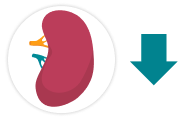
35% average decrease in spleen volume for Cerezyme (out of 15 patients)
30% average decrease in spleen volume for alglucerase (out of 15 patients)
At 24 months, patients on Cerezyme experienced a 57% average decrease in spleen volume*
CHANGES IN LIVER SIZE COMPARED WITH THE START OF THE STUDY
.2025-11-18-16-30-26.png)
11% average decrease in liver volume for Cerezyme (out of 15 patients)
10% average decrease in liver volume for alglucerase (out of 15 patients)
At 24 months, patients on Cerezyme experienced a 20% average decrease in liver volume*
Cerezyme showed similar reductions to alglucerase in the size of enlarged organs in Gaucher disease type 1
IMPROVED RED BLOOD CELL LEVELS COMPARED WITH THE START OF THE STUDY
.2025-11-18-16-55-05.png)
1.9 g/dL average increase in red blood cell level for Cerezyme (out of 15 patients)
1.6 g/dL average increase in red blood cell level for alglucerase (out of 15 patients)
At 24 months, patients on Cerezyme experienced a 2.4 g/dL average increase in red blood cell level*
IMPROVED PLATELET COUNT COMPARED WITH THE START OF THE STUDY
22.7 (× 103/mm3) average increase in platelet count for Cerezyme (out of 15 patients)
15.8 (× 103/mm3) average increase in platelet count for alglucerase (out of 15 patients)
At 24 months, patients on Cerezyme experienced a 40 × 103/mm3 average increase in platelet count*
Cerezyme showed similar improvements as alglucerase in blood problems in Gaucher disease type 1, including decreased red blood cell level and platelet count
*At 9 months, all patients were allowed to continue in the study and receive Cerezyme treatment. Twenty-nine patients continued treatment for a total duration of 24 months.
BONE IMPROVEMENTS
.2025-11-18-17-08-41.png)
Bone X-rays showed improvements in outer layer thickness and density in 7 of 11 Cerezyme-treated patients in the initial analysis period (6 months).
48-month bone clinical trial
This study evaluated the efficacy and safety of Cerezyme in certain bone parameters
About the study
This study included 33 children and adults with Gaucher disease type 1 who reported at least 1 bone problem, such as bone crisis, death of bone tissue, or fractures, and received Cerezyme every 2 weeks for up to 48 months.
The study measured bone response, as shown by bone pain, bone crisis, and bone mineral density (BMD) in the spine and femur (thigh bone).
Long-term effect of Cerezyme on the occurrence of bone pain over 48 months
| Start of study |
| 24 out of 33 patients (73%)
reported bone pain |
| After 48 months |
| 9 out of 23 patients (39%)
reported bone pain |
Long-term effect of Cerezyme on the occurrence of bone crisis over 48 months
| Start of study |
| 13 out of 33 patients (39%)
had a history of bone crises |
The other 20 patients had no history of bone crises
| After 48 months |
| 2 out of those 13 patients (15%)
experienced a bone crisis during the study |
One patient with no bone crisis history experienced a crisis during the study
Bone pain was assessed by patient report on a scale: none, very mild, mild, moderate, severe, or extreme. Bone crisis was defined as pain with acute onset requiring immobilization of the affected area, narcotics for pain relief, and may be accompanied by 1 or more of the following: periosteal elevation, elevated white blood cells, fever, or debilitation of >3 days. BMD is a measure of bone health and risk for fracture. Low BMD means weakened bones.
Long-Term Study
|
Bone Studies
|
Pediatric Study
|
ERT=enzyme replacement therapy; ICGG=International Collaborative Gaucher Group.
Important Safety Information
WARNING: SEVERE ALLERGIC REACTIONS
Allergic reactions, including severe reactions that may be serious or life-threatening (known as anaphylaxis), have occurred during the early course and after repeated treatment with CEREZYME.
Your healthcare professional should initiate CEREZYME in a healthcare setting with appropriate medical monitoring and support measures. If a severe allergic or anaphylactic reaction occurs, your healthcare professional will immediately stop the infusion and provide appropriate medical treatment.
Seek immediate medical care should symptoms occur.
Cerezyme can cause serious side effects including:
Allergic Reactions (Including Anaphylaxis) and Infusion-Associated Reactions (IARs):
Signs of an allergic reaction reported during or shortly after an infusion included itching, flushing, hives, swelling under the skin, chest discomfort, shortness of breath, coughing, a bluish discoloration of the skin due to diminished oxygen, rapid heart rate, and low blood pressure.
Signs of an infusion reaction included rash, chills, fatigue, infusion-site burning, infusion-site discomfort, or infusion-site swelling, fever, and high blood pressure. Tell your healthcare professional right away if you experience any reactions. Your healthcare professional may slow or stop the infusion or may lower the next dose. Your healthcare professional may decide to give you antihistamine, anti-fever, and/or steroid medications before your infusions and monitor you for new signs and symptoms of a reaction.
Common Side Effects:
- Common side effects reported in adults and children include back pain, chills, dizziness, fatigue, headache, allergic reactions, nausea, fever, and vomiting.
Please see accompanying Full Prescribing Information, including Boxed WARNING.
Cerezyme® (imiglucerase) for injection is indicated for the treatment of non-central nervous system (CNS) manifestations of Type 1 or Type 3 Gaucher disease in adult and pediatric patients.
Important Safety Information
WARNING: SEVERE ALLERGIC REACTIONS
Allergic reactions, including severe reactions that may be serious or life-threatening (known as anaphylaxis), have occurred during the early course and after repeated treatment with CEREZYME.
Your healthcare professional should initiate CEREZYME in a healthcare setting with appropriate medical monitoring and support measures. If a severe allergic or anaphylactic reaction occurs, your healthcare professional will immediately stop the infusion and provide appropriate medical treatment.
Seek immediate medical care should symptoms occur.
Cerezyme can cause serious side effects including:
Allergic Reactions (Including Anaphylaxis) and Infusion-Associated Reactions (IARs):
Signs of an allergic reaction reported during or shortly after an infusion included itching, flushing, hives, swelling under the skin, chest discomfort, shortness of breath, coughing, a bluish discoloration of the skin due to diminished oxygen, rapid heart rate, and low blood pressure.
Signs of an infusion reaction included rash, chills, fatigue, infusion-site burning, infusion-site discomfort, or infusion-site swelling, fever, and high blood pressure. Tell your healthcare professional right away if you experience any reactions. Your healthcare professional may slow or stop the infusion or may lower the next dose. Your healthcare professional may decide to give you antihistamine, anti-fever, and/or steroid medications before your infusions and monitor you for new signs and symptoms of a reaction.
Common Side Effects:
- Common side effects reported in adults and children include back pain, chills, dizziness, fatigue, headache, allergic reactions, nausea, fever, and vomiting.
Please see accompanying Full Prescribing Information, including Boxed WARNING.
Cerezyme® (imiglucerase) for injection is indicated for the treatment of non-central nervous system (CNS) manifestations of Type 1 or Type 3 Gaucher disease in adult and pediatric patients.
Important Safety Information
WARNING: SEVERE ALLERGIC REACTIONS
Allergic reactions, including severe reactions that may be serious or life-threatening (known as anaphylaxis), have occurred during the early course and after repeated treatment with CEREZYME.
Your healthcare professional should initiate CEREZYME in a healthcare setting with appropriate medical monitoring and support measures. If a severe allergic or anaphylactic reaction occurs, your healthcare professional will immediately stop the infusion and provide appropriate medical treatment.
Seek immediate medical care should symptoms occur.
Cerezyme can cause serious side effects including:
Allergic Reactions (Including Anaphylaxis) and Infusion-Associated Reactions (IARs):
Signs of an allergic reaction reported during or shortly after an infusion included itching, flushing, hives, swelling under the skin, chest discomfort, shortness of breath, coughing, a bluish discoloration of the skin due to diminished oxygen, rapid heart rate, and low blood pressure.
Signs of an infusion reaction included rash, chills, fatigue, infusion-site burning, infusion-site discomfort, or infusion-site swelling, fever, and high blood pressure. Tell your healthcare professional right away if you experience any reactions. Your healthcare professional may slow or stop the infusion or may lower the next dose. Your healthcare professional may decide to give you antihistamine, anti-fever, and/or steroid medications before your infusions and monitor you for new signs and symptoms of a reaction.
Common Side Effects:
- Common side effects reported in adults and children include back pain, chills, dizziness, fatigue, headache, allergic reactions, nausea, fever, and vomiting.
Please see accompanying Full Prescribing Information, including Boxed WARNING.
Cerezyme® (imiglucerase) for injection is indicated for the treatment of non-central nervous system (CNS) manifestations of Type 1 or Type 3 Gaucher disease in adult and pediatric patients.